41 Best Burst Fade Styles for Men
41 Best Burst Fade Styles for Men
A burst fade is one of the most requested haircuts right now — a fade that curves around the ear instead of cutting straight across the head. This guide covers all 41 style variations by hair type and face shape, how to ask your barber for one, and how to style and maintain it.
What is a burst fade?
A burst fade is a haircut where the fade curves in a semicircle around the ear instead of running straight across the head. Barbers cut a close guideline right at the ear and blend it upward into the length on top.
A burst fade is primarily defined by its curved, ear-centered fade rather than by a fixed neckline shape. The lower blend can vary with the haircut: some versions stay focused around the ear, while others continue toward the neckline.
This is why two burst fades can look different from the back while still having the same signature curved shape around the ear.
Quick Version
A burst fade is defined by the curved fade around the ear.
- Low burst fade: The curve sits lower and closer to the ear.
- Mid burst fade: The curve sits around the middle of the side area.
- High burst fade: The curve rises higher toward the temple.
- Neckline: The lower blend can stay near the ear or continue toward the neckline depending on the style.
- Key difference: Unlike a drop fade, the burst fade is centered around the ear rather than being defined by a downward curve across the back of the head.
Where Sources Disagree
Burst fade guides do not always describe the neckline in exactly the same way. Some describe the fade as staying focused around the ear, while others describe the blend continuing toward the neckline. The consistent defining feature is the curved, ear-centered fade. The lower blend can vary depending on the haircut, fade height, and desired finish.
If you want the fade to stay higher or continue toward the neckline, tell your barber exactly where you want the blend to finish.
How Is a Burst Fade Different from a Mullet, Taper, and Drop Fade?
| Haircut | Fade Shape | Key Difference |
| Burst Fade | Curves in a tight semicircle around the ear | Lower blend can vary toward the neckline |
| Mullet | Not a fade shape — a length style | Short sides, long back; often paired with a burst fade |
| Taper | Straight, gradual blend | No sharp curve, longer transition zone |
| Drop Fade | Curves down toward the nape | Different silhouette from behind |
41 Best Burst Fade Hairstyles for Every Hair Type & Face Shape
Match a style to your face shape and hair type before you pick one — a cut that suits a square jaw won’t always suit a round face.
Find Your Best Fade by Face Shape
| Face Shape | Best Fade Height | Why |
| Round | High | Adds vertical length |
| Square | Low or mid | Softens the jawline |
| Oval | Any height | Balanced proportions |
| Long | Mid fade + volume on top | Shortens visual face length |
| Heart | Low or mid | Keeps balance between the forehead and narrower chin |
| Diamond | Low or mid | Softens prominent cheekbones while maintaining balance |
Find Your Best Fade by Hair Type
| Hair Type | Best Burst Fade Style | Notes |
| Straight | Textured | Adds movement it lacks naturally |
| Curly | Low or mid | Keeps curl pattern intact |
| Wavy | Mid-to-high | Balances natural volume |
| Coily | High or mid taper | Helps blend dense texture more evenly |
Here’s the full list, covering popular burst fade variations across different hair types, lengths, textures, and styling preferences.
1. Burst Fade Mullet
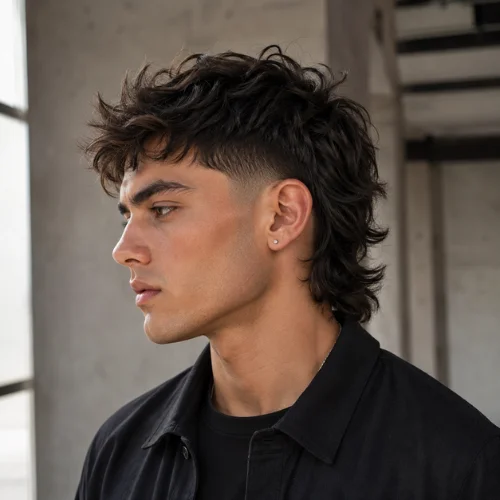
Short, curved fade at the sides with length left long at the back, giving the Burst Fade Mullet its signature shape. It’s one of the most requested variations of this haircut. Works best on round or square faces with straight or wavy hair — ask for a 1 or 1.5 guard on the sides.
1.1 On Straight Hair — Straight hair keeps the length at the back smooth instead of flipping out at the ends.
1.2 Low height — The curve sits close to the ear for a subtler look against the length at the back.
1.3 Mid height — Balanced height — the safest choice if you’re unsure which to pick.
1.4 Softer taper blend — Softer, more gradual blend instead of a sharp skin-fade line.
1.5 High height — Maximum contrast at the sides makes the mullet length stand out more.
1.6 Modern, shorter take — A shorter, more tapered take on the classic mullet shape.
1.7 Shorter back length — Less length kept at the back than a standard mullet.
1.8 Taper blend, curly hair — A softer taper blend suits curly hair better than a sharp fade line.
1.09 With extra length — More length kept at the back and crown for a more dramatic contrast.
1.10 With a V-cut neckline — Back hairline cut into a V shape instead of straight across.
1.11 Buzzed sides — Sides buzzed very short, length kept only at the back.
1.12 With a faux hawk center — Combines a faux hawk’s raised center strip with mullet length at the back.
2. Low Burst Fade
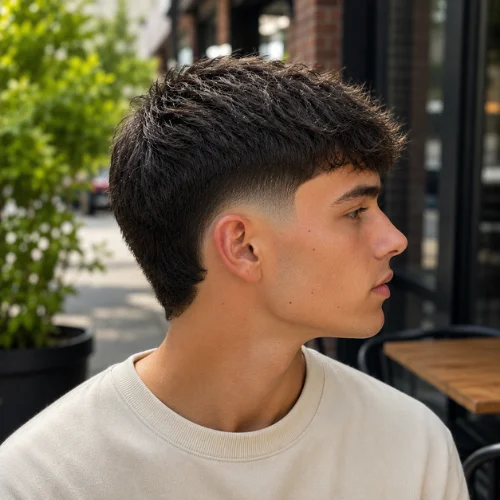
Keeps the curve close to the ear rather than climbing toward the temple. Ideal for conservative workplaces and curly or coily hair. Say “just above the ear” so it doesn’t turn into a mid fade.
This subtle, low-maintenance version works well if you want a clean look without drawing too much attention to the fade itself. Want to see how it comes together on different hair types and lengths? Check out our full breakdown of the Low Burst Fade for more inspiration and styling tips
2.1 On curly hair — A wider, softer blend keeps the curl pattern intact without over-thinning.
2.2 On straight hair — Straight hair holds a cleaner, sharper curve at this height.
2.3 With a textured fringe — Pairs the low height with forward-styled, textured length at the front..
2.4 With minimal length on top — Minimal length on top overall, for the lowest-maintenance version of this style.
3. Burst Taper
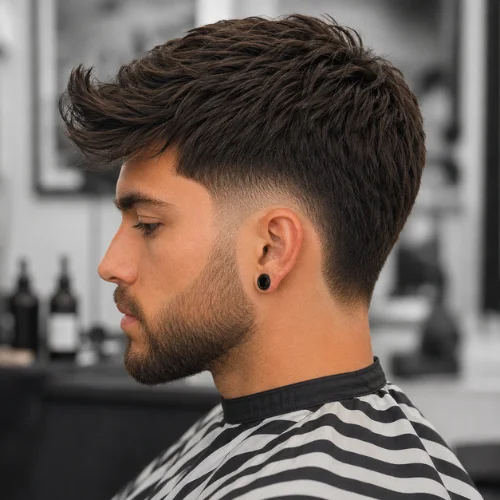
Softer transition into the top than a skin fade. Best for straight or fine hair. Ask for “taper, not skin fade” at the guideline.A taper grows out more softly than a skin fade, so it needs fewer touch-ups. Our burst taper fade guide shows how the curved burst shape around the ear changes the look
3.1 Mid height — Medium height, the most requested taper variant.
3.2 High height — Taper blend pushed higher on the head for more contrast.
4. Mid Burst Fade
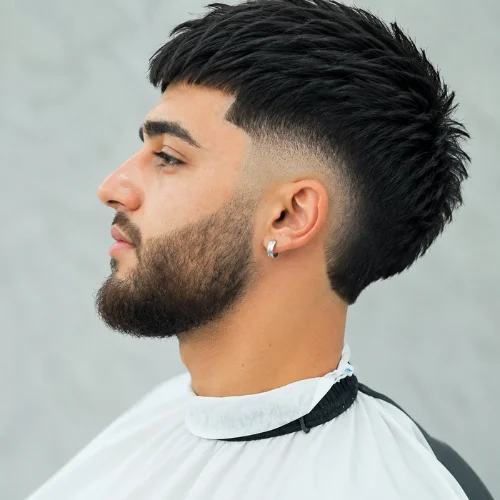
Sits between low and high — Mid Burst Fade is the safest first-timer choice. Works on nearly every face shape and hair type. Standard combo: 2 guard mid-section, bald guideline at the ear.
4.1 On curly hair — Mid height balances curl pattern without needing a wide blend zone.
4.2 On straight hair — Straight hair holds the shape with minimal extra styling.
4.3 Slightly lower height — Sits between low and mid height, slightly more contrast than low alone.
5. Burst Fade Design
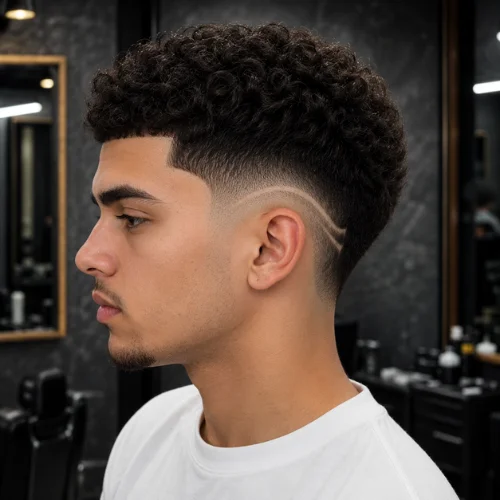
Adds a shaved line or pattern into the fade itself, usually at the temple. Bring a reference photo — “design” covers a lot of ground. Needs touch-ups every 1–2 weeks to stay sharp.
For more creative pattern ideas and placement options, check out our Burst Fade Design Guide before choosing your design
5.1 Placed at the temple — Design placed specifically at the temple or side, rather than across the whole fade.
6. Burst Fade Haircut
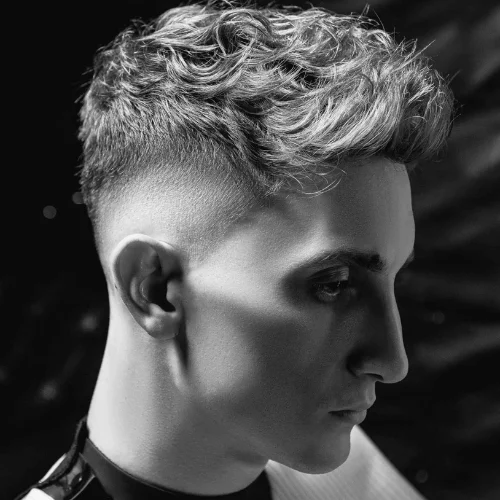
This is the base cut: a curved fade around the ear that blends up into the top, with no extra variation attached. If you want a burst fade and have no strong opinion yet, this is the one to ask for. The shape stays the same, and four choices change how it looks:
- Height: a mid height is the safest default.
- Shortest point: a bald guideline gives the sharpest contrast, and a #1 or #1.5 guard gives a softer finish.
- Top length: anything from a short crop to several inches.
- Back and neckline: the fade can stay near the ear or continue toward the neck, so say which you want.
7. Mohawk Fade
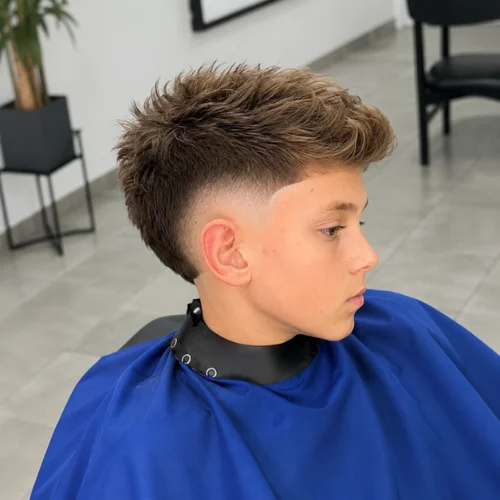
Tight buzz on the sides, longer strip down the center, curved fade shape. Best on straight or wavy hair that can hold an upright style. High-maintenance — expect daily restyling.
Explore our complete Mohawk Fade Styles guide for 32 variations, fade types, and styling ideas
7.1 Faux Hawk Fade — A softer mohawk — sides faded but not fully buzzed, center strip shorter and easier to hold.
7.2 Buzz Mohawk Fade — Sides buzzed very short rather than faded, for a starker contrast with the center strip.
7.3 On straight hair — Straight hair holds the center strip upright more easily with less product.
8. Burst Fade Buzz Cut
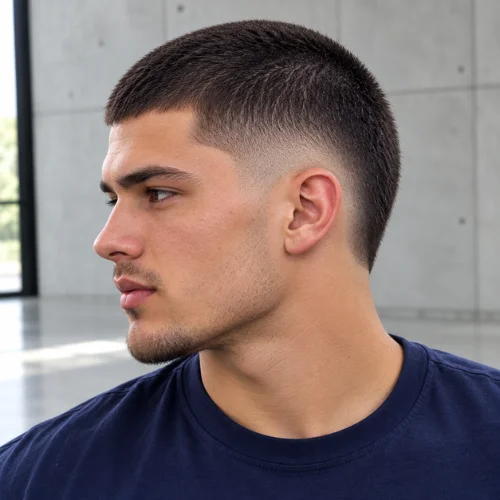
Short buzz on top (2–3 guard), curved sides. Lowest-maintenance version of the style. Say “buzz cut top, burst fade sides” to avoid confusion.
A burst fade buzz cut is a great option for men who want a clean, sharp look with minimal daily maintenance. You can customize this style with different fade heights and clipper guard lengths to suit your preference. Explore our complete guide to burst fade buzz cut styles to discover 34 variations, recommended guard numbers, and tips for explaining your preferred look to your barber
8.1 With a V-cut neckline — Adds a V-shaped back hairline to the buzz cut base.
9. Burst Fade Straight Hair
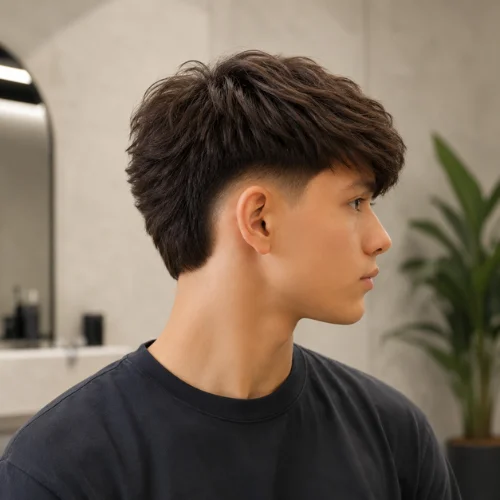
Straight hair doesn’t hold texture on its own, so this style almost always benefits from added texture. Pairs particularly well with a textured or mid-height fade. Ask for point-cutting instead of a blunt cut.
For more attractive straight hair styles visit our Burst Fade Straight Hair guideline
10. High Burst Fade
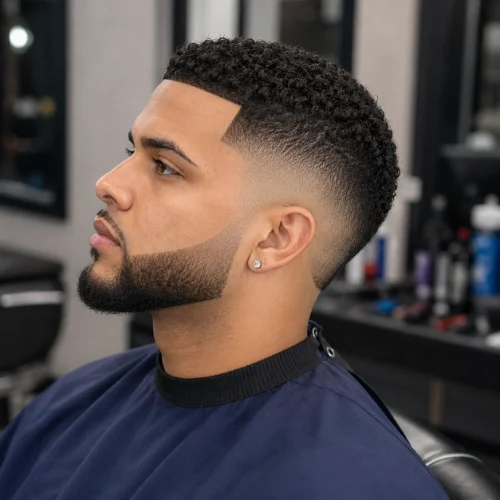
Guideline sits close to the temple for maximum contrast. Best on round faces. Needs touch-ups every 2 weeks — growth shows fast this high up.
If you’re considering this bolder fade height, explore our high burst fade styles for more ideas across different hair types, lengths, and top styles.
10.1 High Burst Fade Curly Hair — Tighter taper at this height blends coily and curly texture more evenly.
10.2 High Burst Fade Straight Hair — Straight hair shows the height’s contrast most clearly.
10.3 High Burst Fade with V — Adds a V-shaped back hairline to the high fade base.
11. Short Burst Fade
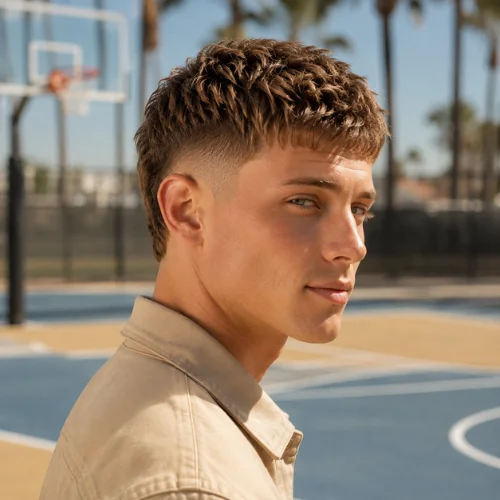
The sides get the curved fade, and the top stays short enough that you barely need to style it. It sits between a full buzz cut and a textured crop. A buzz keeps one guard length all over, while this cut leaves a little shape on top.
Two ways to cut the top:
- Clipper-cut: a #3 or #4 guard, about 10–13 mm (⅜–½ inch).
- Scissor-cut: about an inch, with a bit of texture.
Pair it with a low or mid fade. A high fade on a short top can look severe. Because the top is so short, growth shows mainly at the fade line, so that’s what you’re refreshing every few weeks.
12. Burst Fade Black Men
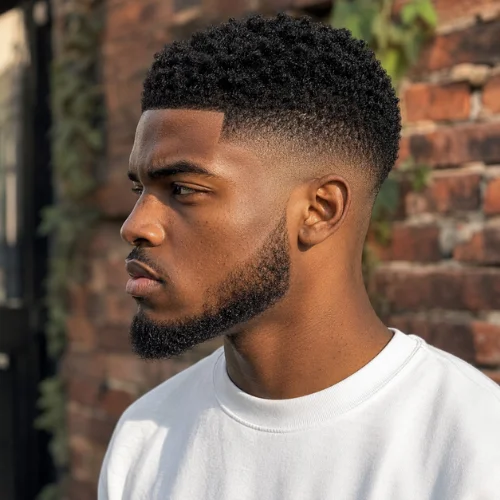
Needs a tighter clipper transition on coily hair to avoid a patchy look. High and mid heights work especially well. Barbers often mix clippers and shears for a clean curve.
13. Low Taper Burst Fade
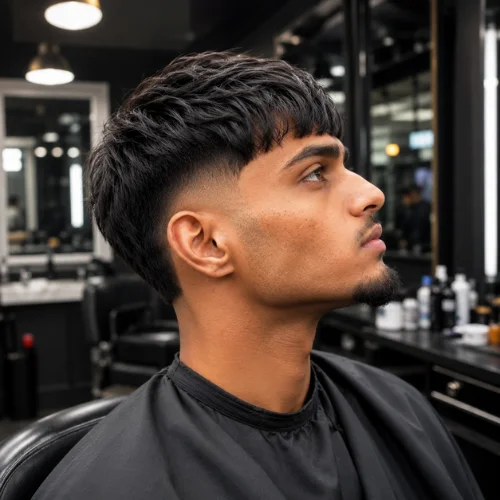
This is the quietest version of the burst fade. The curve starts low, just above the ear and sideburn. The blend is a taper, meaning the sides stay short but are never cut to bare skin. You get a clean curve without a high-contrast line.
How it differs from its neighbors:
- Low Burst Fade (#2): the same low placement, but it can be cut as tight as skin.
- Burst Taper (#3): a taper blend, but not limited to the low position.
This version combines both, and it’s the one to ask for if you want a fade that’s barely noticeable at first glance. It grows out gently, so you can usually stretch to 3–4 weeks between trims. If you want a sharp, high-contrast look, go mid height with a skin finish instead.
14. Burst Fade Long Hair
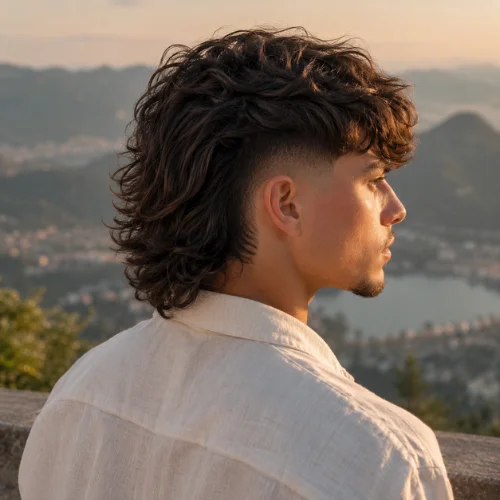
Significant length kept on top, giving more styling versatility than shorter pairings. Works especially well with wavy or curly hair, since there’s enough length to let natural texture show.
15. Burst Fade Slick Back
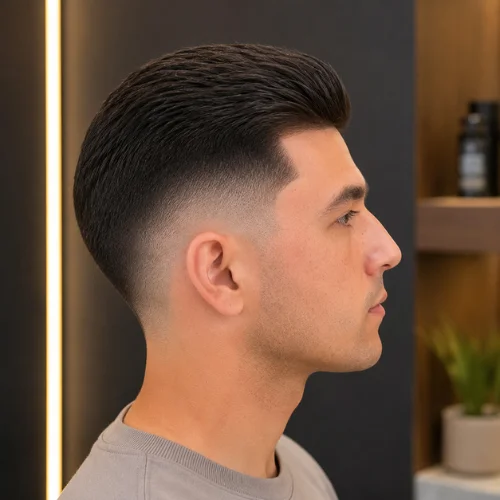
Hair combed straight back with a strong-hold product; needs enough length on top to hold the shape. A pomade or gel with strong hold works better here than a matte clay, which won’t give enough shine or control.
16. Burst Fade with Textured Fringe
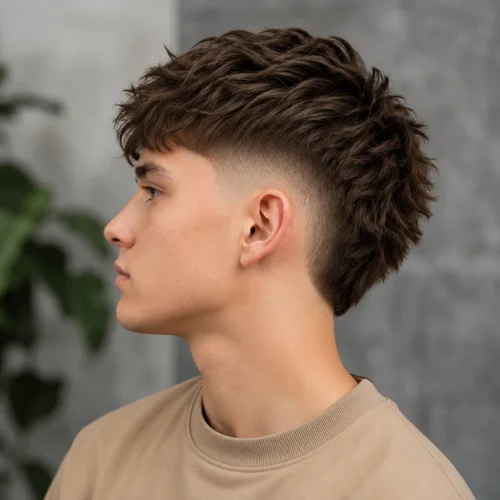
Front section falls forward with deliberate texture rather than a smooth, combed finish. Texturizing scissors or a matte paste help keep the fringe looking intentional rather than flat.
17. Burst Fade Fringe
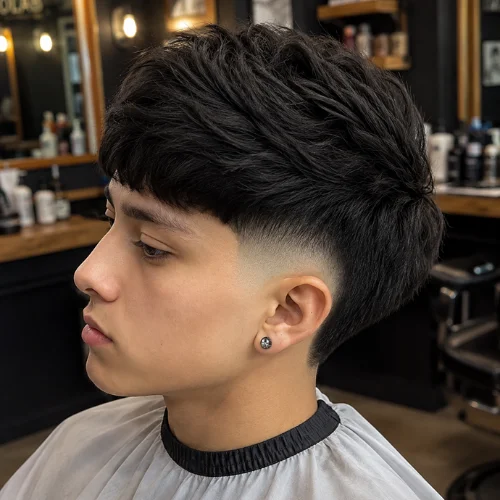
Any forward-styled front section, textured or not — a broader version of the style above. Straight hair holds this shape most easily; curlier hair may need a light styling cream to keep it in place.
18. Burst Fade Wavy Hair
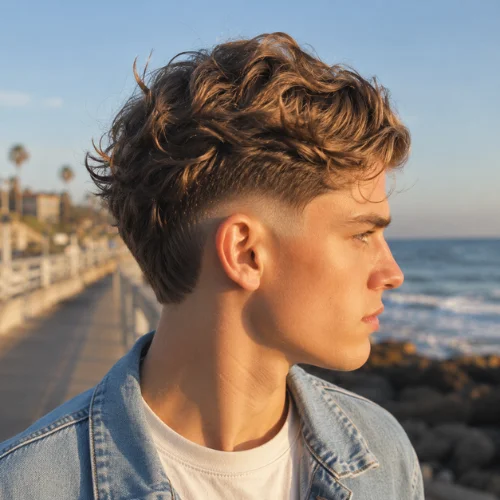
Mid-to-high heights balance natural wave volume best. A low fade can look uneven against wavy hair’s natural movement, so most barbers recommend going at least mid-height.
19. Middle-Parted Burst Fade
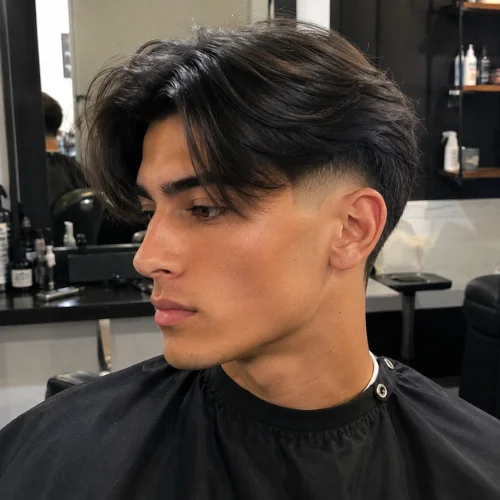
Top hair parted center rather than to one side; works best on straight or wavy hair that holds a part. Curly hair tends to resist a middle part unless it’s cut with enough length to fall into place.
20. Sunburst Fade
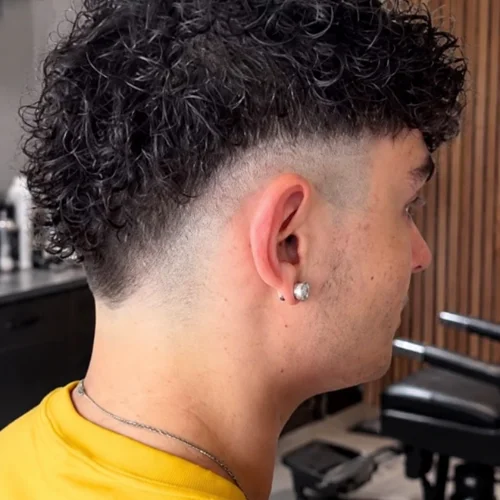
A rounder, wider curve than a standard version — the guideline blends further around the ear. It suits round and oval faces particularly well, since the wider curve adds symmetry rather than sharp contrast.
21. Textured Burst Fade
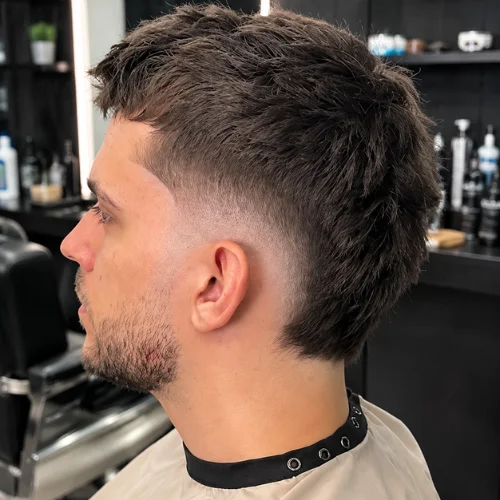
Scissor or texturizing work adds movement to the top instead of leaving it smooth. This is the most common request for straight hair, since texturizing gives it movement it doesn’t have naturally.
22. Burst Fade With a V-Shaped Neckline
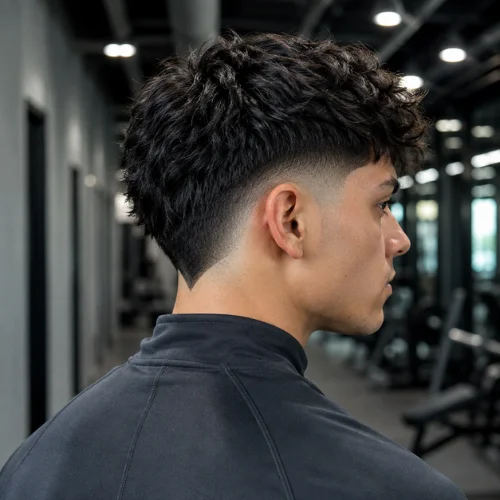
Back hairline cut into a V shape instead of straight across, often paired with longer styles like mullets. It’s purely a neckline choice and doesn’t change how the fade itself is cut.
23. Burst Fade Comb Over
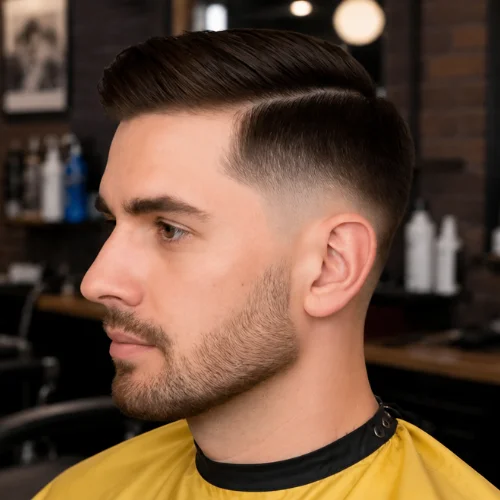
Side part with hair combed across the top for a more classic, polished finish. Needs enough length on top — usually 2 to 3 inches — for the comb-over to hold its shape with product.
24. Burst Fade Curly Hair
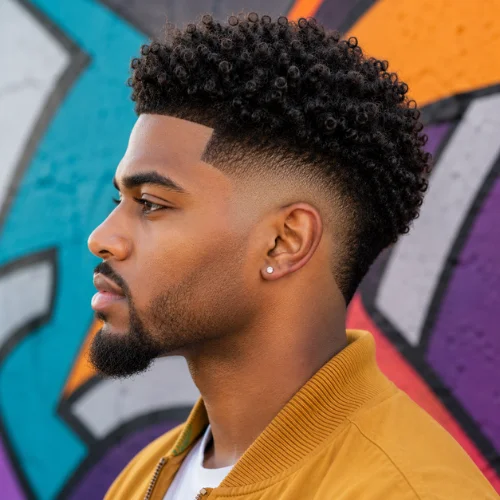
Low-to-mid heights keep curl pattern intact without over-thinning. A high fade can look patchy on tighter curl patterns unless the barber uses a slower, more gradual blend.
25. Burst Fade with Beard

The fade either blends directly into the beard line or stays separate with a defined edge, based on preference. Tell your barber which one you want before they start, since it changes how they approach the sideburn area.
26. Burst Fade Taper Faux Hawk Back

Combines a tapered curve with a faux hawk shape that continues toward the back of the head. Needs regular styling to keep the raised center section from falling flat throughout the day.
27. Flat Top Fade
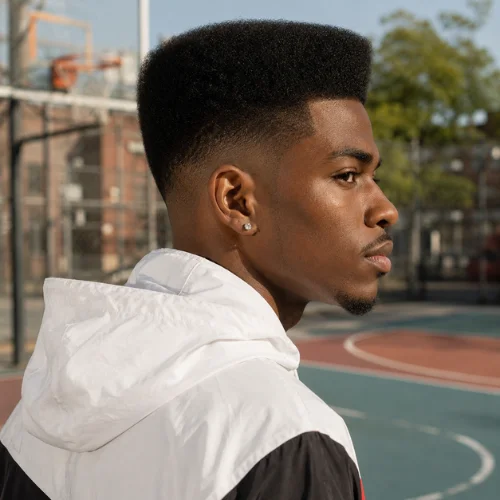
Top cut flat and level rather than textured or rounded, paired with a sharp curve underneath. It’s a more structured, higher-maintenance style that usually needs a flat-top comb to maintain at home.
28. Burst Fade Blonde Hair
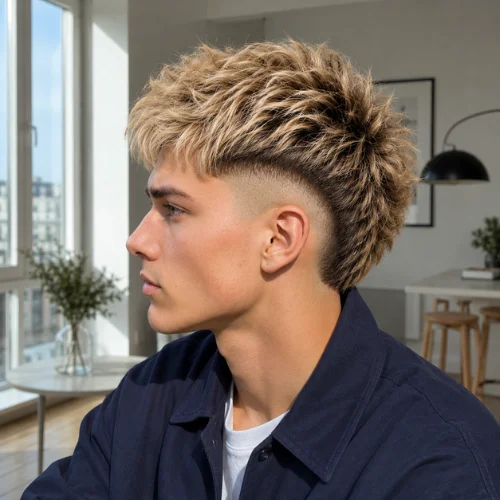
Contrast between the fade and length shows more clearly than on darker hair, since bleached length stands out against the darker skin at the fade line. Because of that contrast, even small unevenness in the blend is more noticeable, so precision matters more here.
29. Burst Fade Asian
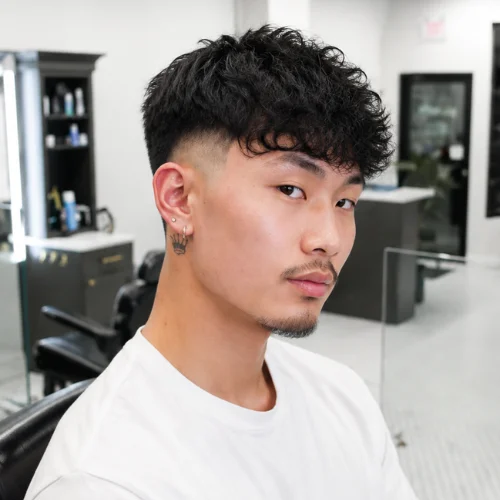
Coarser, straighter hair often needs a slightly wider blend zone for the curve to look clean. A barber experienced with this hair type will usually adjust guard sizing slightly to avoid a harsh, stepped transition.
30. Skin Burst Fade
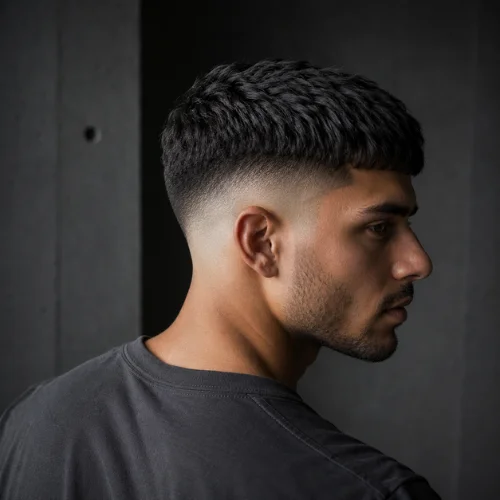
Guideline cut to bald skin instead of left with stubble, for maximum contrast. It needs the most frequent touch-ups of any variant on this list, since regrowth shows almost immediately at the skin line.
31. Quiff Fade
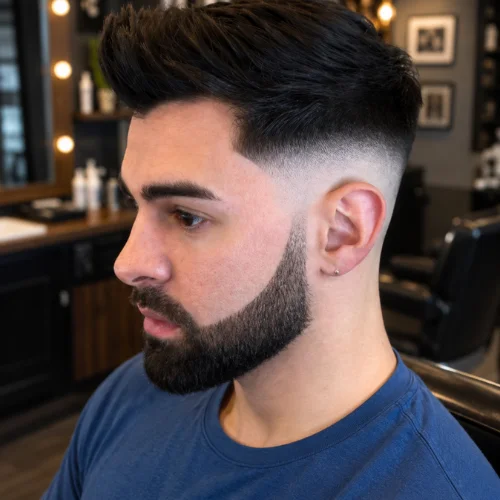
Top styled upward and back at the front, paired with a curved side. Needs enough length at the front — at least 3 inches — plus a strong-hold product to keep the height through the day.
32. Burst Fade Perm
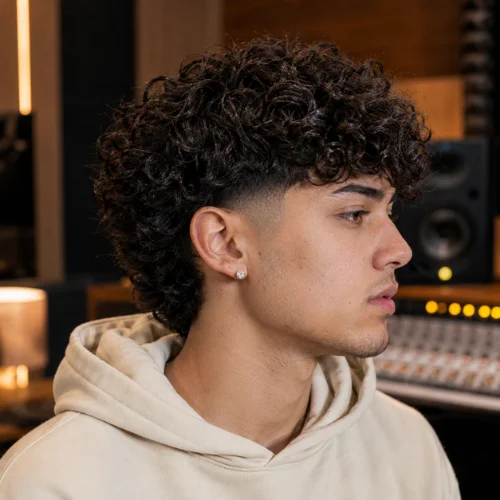
A chemical perm adds curl pattern to the top, layered over the curved shape at the sides. Since the perm changes hair texture, it’s worth scheduling the fade touch-up a week or two after the perm settles.
33. Drop Burst Fade
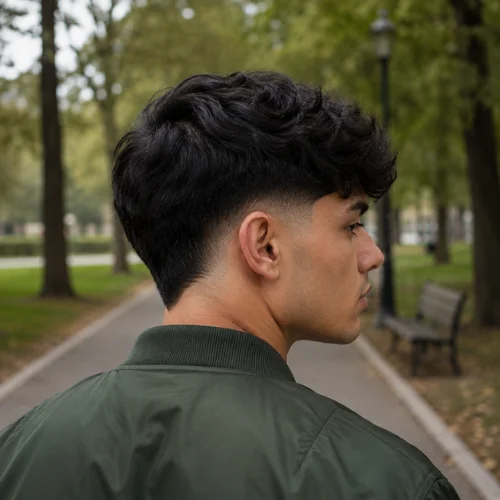
Blends the curve around the ear with a drop fade’s downward curve toward the nape. It’s a more advanced cut to execute cleanly, so it’s worth confirming your barber has done this specific combination before.
34. Burst Fade Blowout

Top blown out for extra volume and height — common on curly or coily hair. A round brush and diffuser attachment help hold the shape without flattening the natural curl pattern.
35. Low Burst Fade Buzz Cut
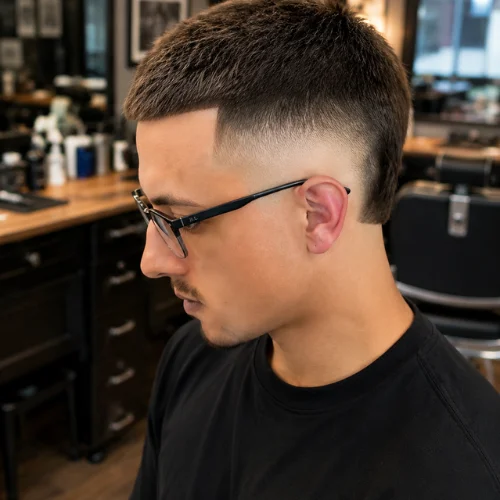
Combines the lowest-maintenance height with a fully buzzed top for minimal upkeep. This is close to a zero-styling option — most people just run a guard over the top and don’t touch it again until the next trim.
36. Burst Fade French Crop
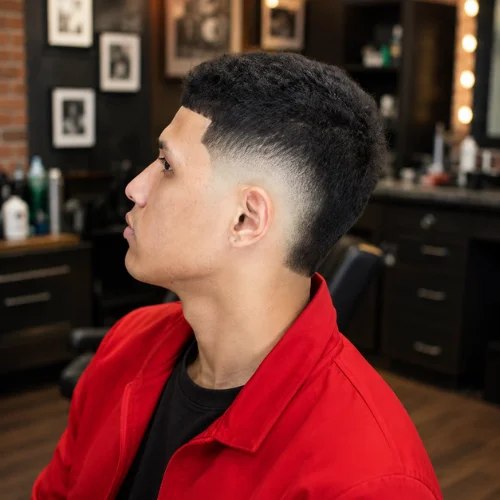
Short, textured fringe on top with minimal daily styling needed. A small amount of matte paste worked through damp hair is usually all it takes to hold the shape.
37. Burst Fade Afro
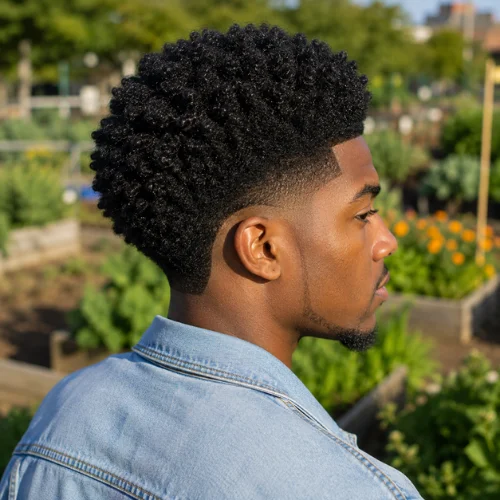
Curved sides paired with natural afro texture left long on top. The fade height is usually kept low or mid so it doesn’t compete visually with the volume on top.
38. Crew Cut Burst Fade
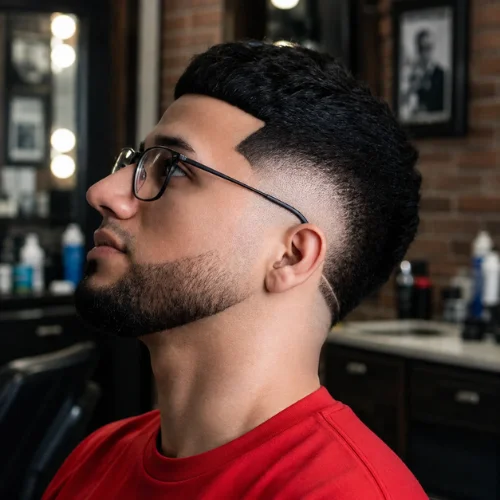
Short, uniform length on top in classic crew cut style, paired with a curved side. It’s one of the lowest-maintenance combinations on this list, needing little more than a trim every few weeks.
39.Natural Curly Texture With a Burst Fade

Loose, slightly untidy curls on top with a tight curved fade around the ears. The contrast is the whole look: wild up top, sharp at the sides. It works best on natural curls about 3 to 4 inches long. Stick to a low or mid height, because a high fade can look patchy against tighter curl patterns. Skip the heavy gel. A curl cream scrunched into damp hair, then air-dried or diffused, keeps the mess looking intentional instead of frizzy..
40. Spiked Mohawk With a Razor Detail

A tight burst fade on the sides, a spiky strip down the center, and one or two razor-shaved lines cut into the side near the temple. You need about 2 to 3 inches on top for the spikes to stand up. Work a strong-hold clay or paste through with your fingers, pull the hair upward, and finish with hairspray. This is a high-maintenance cut. The lines blur within a week or two, so plan on frequent touch-ups. Bring a reference photo and tell your barber how many lines you want and where they should sit.
41.Long Hair Burst Fade With Braided Styling

Braids or cornrows on top, or length kept long at the back, paired with a curved fade at the sides. The short, clean sides make the braid pattern stand out. Most barbers prefer to cut the fade after the braids are done, so the lines match up and the blend looks even. Ask whether your barber and braider can coordinate, or book them close together. A low or mid height keeps the shape balanced against the length. Keep the scalp moisturized, because braids and fresh fades can both dry it out
Should You Get a Burst Fade? (Pros & Cons)
Pros
Cons
How to Ask Your Barber
| Say This | Why It Matters |
| Show reference photos | This haircut covers dozens of variations |
| Specify fade height | Low, mid, or high — the biggest variable in the final look |
| Explain your neckline preference | Rounded vs. squared changes the shape |
| Mention beard blending | Changes how they cut the sideburn area |
| Give a guard number for the top | More precise than “short” or “medium” |
| Describe the texture you want | Textured, point-cut, or smooth changes technique |
| Discuss the sideburn transition | Tapered vs. hard line — easy to overlook |
What Your Barber Is Actually Doing: A Step-by-Step Look
The exact process varies with the fade height, hair length, and desired finish. A low burst fade keeps the curved blend closer to the ear, a mid burst fade places it higher, and a high burst fade pushes the curve closer to the temple. The steps below show the general process; your barber adjusts the guidelines and blend height to suit the chosen style
Step 1: Set the burst shape. Your barber establishes the curved guideline around the ear at the requested height. This semicircular shape is the foundation of the burst fade.
Step 2: Create the first guideline. Using the clipper, the barber removes the hair above the initial guideline while following the same curve around the ear.
Step 3: Build the next section. A higher guard is used to create the next transition zone, with the height adjusted for a low, mid, or high burst fade.
Step 4: Remove bulk above the fade. Clipper-over-comb or scissor work softens the transition into the longer hair without removing more length than necessary.
Step 5: Blend the middle section. The barber uses shorter guards and controlled flicking motions to gradually soften the visible guideline.
Step 6: Clean the lower section. The shortest part of the fade is blended into the surrounding hair, with the finish adjusted according to whether you want a skin, taper, or softer fade.
Step 7: Check the curve. The barber steps back and checks the fade from multiple angles to make sure the curve around the ear is balanced on both sides.
Step 8: Shape the temple and hairline. The front hairline and temple are cleaned up to follow your natural growth pattern. A C-cup refers to the curved corner where the temple hairline meets the sideburn area; its exact shape can be adjusted to your hairline and preference.
Step 9: Refine the shortest area. If you’re getting a skin burst fade, a foil shaver can be used to remove remaining stubble and create a cleaner contrast.
Step 10: Clean the edges. A razor may be used around the hairline and other edges for a sharper finish, depending on the style requested.
Step 11: Blend into the top. Shear-over-comb or texturizing work removes excess bulk where the fade meets the longer hair.
Step 12: Finish and inspect. The barber checks the overall balance, removes any remaining heavy areas, and styles the hair to show the finished shape.
How to Style IT
1. Clean and damp hair. Towel-dry to about 70% before styling.
2. Apply a pre-styler. A lightweight heat protectant or mousse at the roots.
3. Blow-dry to shape. Round brush for volume, paddle brush to smooth.
4. Refine the texture. Fingers or a wide-tooth comb to break up stiffness.
5. Lock it in. Clay or paste for texture, pomade or wax for slick looks, hairspray for height.
6. Touch up midday. A small amount of product keeps it holding all day.
How to Maintain a Burst Fade
| Habit | Why |
| Trim every 2–3 weeks | The curved guideline blurs fastest |
| Style daily, even lightly | Keeps the top looking intentional |
| Wash 2–3 times a week | Over-washing strips natural oils |
| Moisturize the scalp | Prevents flaking around the fade |
| Use heat protectant every time | Repeated heat dries hair out fast |
For more men’s hair and grooming tips, visit Maximum On Point for additional hair-care and grooming guidance.
Common Burst Fade Mistakes
| Mistake | Fix |
| Wrong fade height | Match it to your face shape, not just a photo |
| Unclear neckline | Always specify rounded or squared |
| Wrong products | Match product weight to your hair type |
| Growing it too long | Trim before 3–4 weeks or the curve blurs |
| Ignoring growth pattern | Tell your barber about cowlicks and natural partings |
Best Products for a Burst Fade
| Product | Best For | Best Hair Type |
| Texture Clay | Natural texture | Straight, Thick |
| Texture Powder | Volume | Fine, Straight |
| Sea Salt Spray | Beachy texture | Straight, Wavy |
| Molding Paste | Flexible styling | All Hair Types |
| Styling Cream | Soft definition | Curly, Wavy |
| Hydrating Argan Oil | Moisture & frizz control | Dry, Curly |
| Clarifying Shampoo | Deep cleansing | All Hair Types |
| Hydrating Conditioner | Moisture | Dry, Curly |
| Pomade | Slick hairstyles | Straight |
| Hair Wax | Everyday textured styles | Short Hair |
| Matte Fiber | Messy texture | Thick Hair |
| Hair Gel | Maximum hold | Straight |
| Heat Protectant Spray | Heat protection | All Hair Types |
FAQs
Is the burst fade still trending? Yes. It works across enough hair types and styles to stay relevant beyond a single trend cycle, unlike fades tied to one specific look.
What is the origin of the burst fade haircut? It grew out of the fade family — barbers wanted a way to blend around the ear more cleanly than a straight fade line allowed. The curved guideline became its own recognized style rather than just a blending technique.
Who suits a burst fade haircut best? Nearly everyone, with adjustments to height and curve based on face shape and hair type. The core shape flexes more than most fade styles, which is why it works on such a wide range of people.
What are the best hairstyles to pair with a burst fade? Mullets, mohawks, textured crops, and buzz cuts on top. Which one works best comes down to how much length and daily maintenance you’re willing to put in.
Can you combine a buzz cut with a burst fade? Yes — it’s the lowest-maintenance version of the style.
Can kids get a burst fade haircut? Yes, usually with a slightly wider blend zone since kids’ hair grows faster.
How often should you get a burst fade retouched? Every 2–3 weeks; higher fades need touch-ups closer to every 2 weeks.
How long does the cut last? The overall cut lasts months with trims, but the sharp curve fades within 2–3 weeks.
Does it work with curly hair? Yes — low and mid heights work best on curly hair.
Can you wear it with long hair? Yes, that’s essentially a burst fade mullet.
How much does a burst fade cost? About the same as a standard fade at your barbershop, more if you add a design. Pricing varies more by location and shop than by the fade style itself.
How long does my hair need to be for a burst fade? No strict minimum — even very short hair works.
Can I do a burst fade at home? You can learn the basic process at home, but achieving a clean, even burst fade on yourself is difficult. The curved guideline around the ear requires precise control, consistent blending, and good visibility from multiple angles. This guide explains what a barber does so you can understand the process and communicate what you want, but a professional barber is the safer choice for the actual cut.
Which height is easiest to maintain? A burst fade buzz cut — no length on top to style.
Does it suit a professional workplace? A low or mid fade without a design usually reads as workplace-appropriate. High fades and visible designs are more likely to depend on your specific workplace’s dress code.
What’s the difference between a burst fade and a skin fade? Skin fade describes how close to bald the fade gets, while burst fade describes the curved shape of the guideline. A skin burst fade combines both — a bald guideline cut in that curved shape.
Conclusion
A burst fade works because the curved guideline flatters more face shapes and hair types than a straight fade. Get your height, neckline, and beard blend specified clearly, stay on a 2–3 week trim schedule, and the style holds up well between visits.
Editorial Note: This guide is based on current barbering practices, hairstyle trends, and analysis of leading barber resources. Hairstyles are subjective, so consult an experienced barber for personalized recommendations based on your hair type, face shape, and maintenance preferences.